In February 2025, the Department for Education announced significant reforms to the apprenticeship system. These changes are designed to simplify assessment, increase completion rates, improve accessibility, and address ongoing skills gaps across many sectors. These reforms began rolling out in October 2025 following a phased implementation process.
They mark a shift in how assessments are designed, delivered and quality assured. Below we outline the latest updates and confirmed reforms, plus what they mean for apprentices, employers and training providers.
New terminology to reflect a new process
- “Apprenticeship Assessment” now replaces End-Point Assessment (EPA).
- “Assessment Organisation” (AO) replaces EPAO, although LEIA will adopt the term Awarding Organisation under the Ofqual terminology
- Trailblazer / Employer groups are now known as ‘Groups of Persons.’
Shorter duration
The minimum apprenticeship length has been reduced from 12 to eight months (from August 2025) to help skilled workers qualify faster.
Funding
- £1000 grants are available for 16-18yr old apprentices.
- The Apprenticeship Levy is now known as the Growth and Skills Levy, allowing 50% of funds to be used for non-apprenticeship training like modular courses.
- DWP have defunded 16 Apprenticeship standards to pivot funds towards 16-24 yr olds.
Education requirements
Apprentices aged 19+ no longer require mandatory English and Maths qualifications. This is designed to give employers discretion based on the needs of the job.
Changes to end-point assessments – moving to apprentice assessments
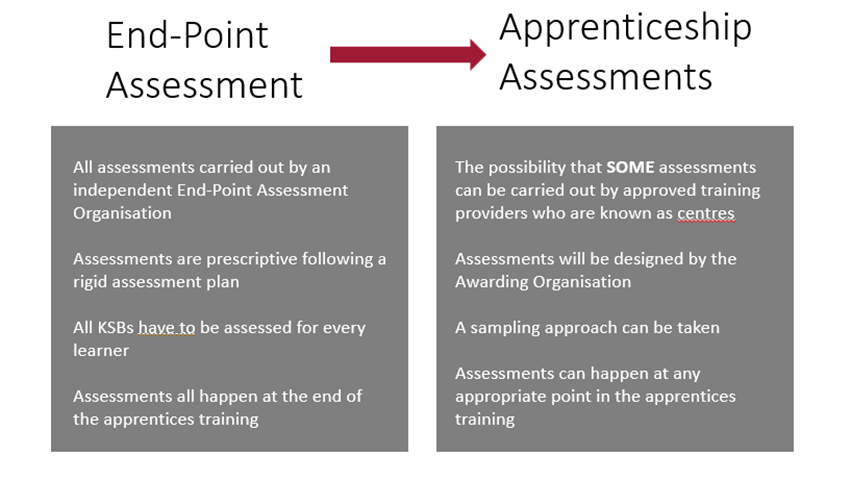
What this means for employers
- Direct verification now means employers are best placed to verify behaviours, rather than external assessors.
- More flexibility when it comes to recruitment. Shorter minimum durations will allow faster upskilling of workers with prior technical expertise.
- Levy funds must now be used within 12 months or they expire, requiring more active workforce planning.
- Employers no longer have to extend their programme dates for part-time learners, making it easier to manage non-standard working hours.
Actions to take now
- Engage with AOs: Speak with LEIA Assessment or your current EPAO about their transition to the new centre-assessed models.
- Review training plans: Discuss with your training provider whether to opt existing adult apprentices in or out of Functional Skills exams if you haven’t already done it.
- Audit Internal HR: Update your performance management systems to capture the evidence needed to verify apprentice behaviours.
- Plan the Pipeline: Identify upcoming “short course” needs that could be funded via the new Growth and Skills Levy from 2026.
Get in touch if you have any questions or would like to know more.