Mike Burke
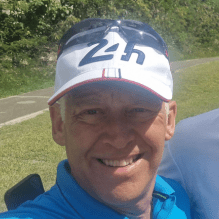
Mike’s journey in the lift industry started with an advert in the Sun newspaper in 1989. The Express Lift Company was looking for ‘associated’ engineers or engineers with either a mechanical or electrical background they could train to become lift engineers. His background was mechanical, having done an apprenticeship with Ford Motor Company, and he started with them in 1990 as a trainee installation engineer. After finishing his J5 and J26 modules, he went on to study with NALM (National Association of Lift Makers) and did the first four modules successfully. From installation, he moved to heavy repairs and eventually ended up as a call-out engineer within the city of London. In 1998 he joined the Post Office as a resident engineer and in 2001 joined Apollo Lifts as a supervisor. In 2006 an opportunity arose to join a lift consultancy company and in 2021 he started my own consultancy business, The Elevator Consultancy.
Why did you want to become an End Point Assessor?
“Well, having done an apprenticeship when I left school I feel as though they underpin every industry. They are the best way to learn your chosen trade and, in this instance, electro-mechanic or lift engineering – something I’m very passionate about.”
Kris McGough

Kris McGough has dedicated over two decades to the lift safety industry. He started in 1999 with Stannah Lifts and completed an advanced modern apprenticeship while studying for a HND in engineering. After 16 years with Stannah, Kris started his own lift company. Rise Compliance was launched in 2019 with a mission focused on providing cost-effective and efficient lift training solutions. Kris and his team at Rise Compliance aim to eliminate barriers to access, ensuring that individuals and organisations of all sizes are empowered in their pursuit of safe and seamless vertical transportation. It has since become a trusted partner for the likes of Network Rail and the NHS.
On becoming an End Point Assessor, Kris says: “I wanted to give back to the industry and thought it would be a good opportunity to do so.”
Phil Beresford MSc. CMIOSH, PIEMA
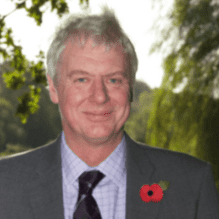
On leaving school, Phil completed an EITB Apprenticeship (J5/J25) and has spent around 35 years in the industry mostly working in Health and Safety but also Quality and Environment. He has also participated in the LEIA safety committee for around 20 years and chaired the committee between 2013 and 2021.
Phil has assisted industry colleagues in the development of BS9102:2014 and more recently BS7255:2023. He’s currently a self-employed safety consultant specialising in the Lift industry.
Phil Beresford is an independent Health & Safety Consultant.
Danny Wathen

Danny is a qualified lift engineer with 24 years in the industry. He has worked as an engineer’s mate right through to senior management positions working for a small independent as well a couple of the well-known global leaders in the lift industry.
His experience spans all disciplines from construction, modernisation repairs and servicing. For the past six years, Danny has been running his own business completing new installations, modernisations and site surveys. More recently, with the help of LEIA, he gained his CAVA 3 qualification and is now completing end-point assessments for LEIA Assessment.
“I became an EPA to be able give back the industry and invest in the new engineers coming through and I believe the end point assessment really adds validity to the engineers’ qualifications opposed to just having the NVQ alone.”
Rob Murray IEng MSOE MBES
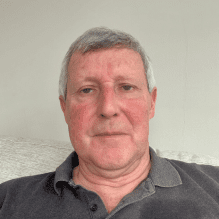
Following a 22 year career in the Royal Navy as a Marine Engineer, Rob spent more than 25 years with HSB Engineering Insurance Services as a multidiscipline Engineer Surveyor, carrying out statutory examinations across a wide range of safety-critical plant and equipment.
His surveying background includes extensive work on lifting and handling plant—ranging from tower cranes, mobile and overhead cranes to passenger and goods lifts, vehicle lifts, forklift trucks etc, ensuring compliance with the Lifting Operations and Lifting Equipment Regulations (LOLER).
Rob also has significant experience with minor and intermediate-pressure plant, including steam-generating equipment, hot water heating boilers, and pressure vessels such as autoclaves, CO₂ receivers and compressed-air systems. He has routinely prepared detailed Written Schemes of Examination in line with the Pressure Systems Safety Regulations (PSSR).
Additionally, he has carried out examinations and performance testing on a variety of Local Exhaust Ventilation systems, reporting in accordance with Regulation 9 of the COSHH Regulations to help ensure safe working environments.
After retiring in May 2025, Rob chose to channel his knowledge and experience into supporting the next generation of professionals. As an end-point assessor for Engineer Surveyor apprentices, he is committed to helping emerging engineers develop the competence, confidence and integrity required for a successful and responsible career in the industry.